I didn’t know the word autism would one day be part of my children’s medical files. I only knew the ache in my body when something felt off – a deep, neurological zip, like a quiet flicker of primal curiosity trying to break through. It was weak, maybe, but it was there. It pulsed in my chest and whispered: look closer.
I knew the way my daughter didn’t turn her head with conviction when I said her name, over and over again. I knew the silence and lack of movement in my son’s mouth where I expected to hear “Mama.” I knew, even before I had the words or the paperwork or the professionals to confirm it. My body knew.
This is what I know now: You don’t need a diagnosis to feel when something in your child is pulling away from the expected. You just need to listen: to your child, yes, but also to yourself.
The early signs no one warns you about
For Milly, my first child diagnosed, the signs were subtle until they weren’t. She coo’d. She laughed. She met a few-ish milestones on time like rolling over, attachment to me, Mom, etc. But somewhere after her first birthday, it was as if her development became stagnant. I felt like I couldn’t reach her. She started fixating on objects. I’d call her from across the room, and she wouldn’t turn her head. Was it hearing? Was it personality? Was it me?
I had just given birth to Mack when Milly was evaluated for early intervention. I was nursing Mack in a tiny office cubicle while a social worker watched my daughter spin in circles and scream and drop any crayon offered to her. I was told “I know you’re seeing what you see, but let’s keep getting eyes on her.” In other words, to wait.
But I couldn’t wait. Not because I was impatient but because I was certain.
I continued with evaluations, I found more neurologists, I contacted anyone in my network that I thought could help or at least pacify me. I kept logs of behavior. I videotaped. I screenshot and favorited developmental milestone charts on my phone and sat up all night comparing them to Milly’s patterns. I became a mother-scientist, cataloging what the world refused to validate.
Diagnosis as aftershock
When Milly was diagnosed with autism spectrum disorder, “level 2 maybe 3,” meaning she required substantial support, I remember being both devastated and relieved. Devastated, because I didn’t know yet what autism was, only what I thought it wasn’t. And relieved, because I finally had language for what I knew in my bones.
When Mack was diagnosed, the ground shifted again. At 11 weeks old, I was tracking his data that only a mother can know: how his legs stiffened when he nursed, the way his wrists move in circles when he’s happy. Early micro-stims. This time, I was less shocked, more steady. I had already crossed over into a new world: one of IEP meetings, therapy centers, AAC evaluations, and neurodevelopmental terminology. But this second diagnosis felt heavier. The odds of having two children with profound autism are slim, they said. But I wasn’t thinking in odds – I was thinking in hours. Hours of care, hours of paperwork, hours of crying, hours of research, hours of love.
How I mother now
People often ask me, “How do you do it?” I never know how to answer that. Because the real answer is: instinct, structure, tenderness, and advocacy.
Instinct guides every decision I make. When Milly began using a speech device, it wasn’t because someone suggested it – it was because I saw her trying with our beloved speech therapist to communicate with her eyes and body and felt the urgency of giving her a bridge to language. When Mack started showing sensory seeking behaviors, I didn’t wait for a sensory profile. I trusted what I saw. I trusted what I felt. That’s what kept us afloat.
Structure is how we survive. Our days are predictable and yet full of uncertainty. We practice transitions. This doesn’t mean every day is calm, but it gives my kids a scaffold to move through the world. And honestly, it gives me one, too.
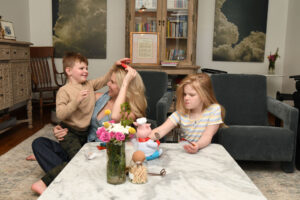
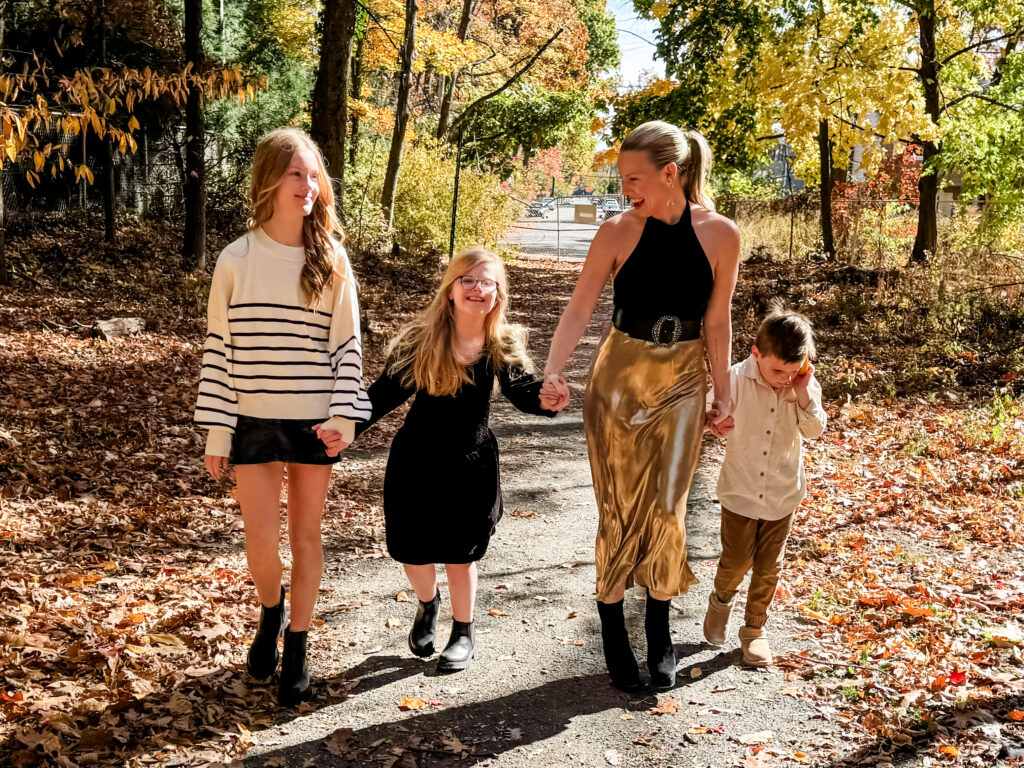
Tenderness is our language. When your child doesn’t speak, you learn to listen differently. A head resting on your shoulder is a poem. A quiet giggle in the bath is a symphony. I see the beauty in the pauses, the patterns, the presence. I’ve learned to mother in a world without words, and I’ve never felt closer to my children.
Advocacy is non-negotiable. I am not just their mother, I am their voice. I’ve learned to navigate school systems, challenge insurance denials, research clinical therapies, and explain my children’s needs to every professional they encounter. And I do it again the next day. Because no one else will fight like I will. And no one else should have to guess what these kids need.
A network of support that feels like a village
Parenting profoundly autistic children is not a solo endeavor. It can’t be. It requires a team that sees your children as whole people and you as a whole parent. That’s why I aligned so deeply with Avela Health. The approach Avela offers—one that sees autism care as a whole-family journey, not just a checklist of appointments—is exactly what I wish I’d found sooner. They bring together expert diagnosis, strengths-based therapy, and real, practical support for parents like me who are juggling a lot and just want to do right by their kid.
The difference between surviving and thriving is not just access, it’s connection. It’s knowing there’s a care coordinator who tracks the 10 specialists your child sees. It’s knowing there’s a therapist who also talks to your pediatrician. It’s knowing your child’s entire care team is speaking to each other, not just to you.
That’s the kind of care I want every family to have. And that’s why I write. That’s why I share.
Redefining “Profound”
“Profound” doesn’t just describe the level of support my children need, it also describes the depth of my love, the intensity of our days, and the transformation of what I thought motherhood would be.
I didn’t get the milestones I expected. But I got “inchstones” that felt like miracles: the first time Milly navigated her speech device to say “My Name Is Milly” or when Mack learned how to lead me to the snack drawer. I’ve watched my children fight to express themselves in a world that often underestimates them. I’ve watched myself transform from a woman who doubted her instincts to a mother who builds a life around them.
This is what I know now: profound autism does not mean a lack of joy, or potential, or connection.
It means we must look closer. Listen deeper. Move slower. And love harder.
Always, love harder.