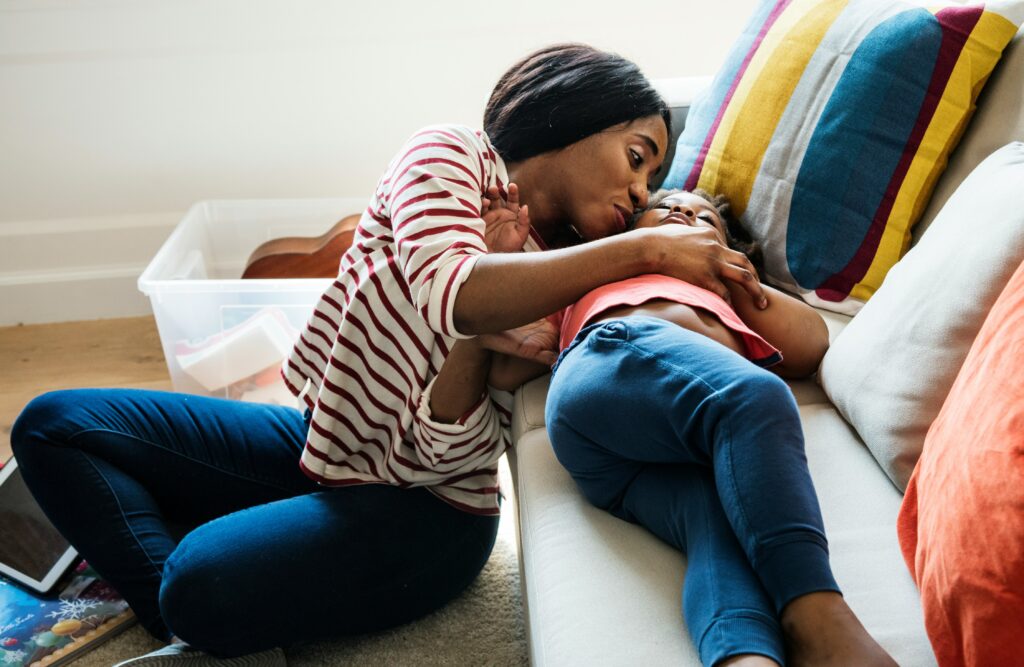


“The teacher says she’s doing fine, but every afternoon when we get home, it’s tears and yelling. She slams her backpack, and hides in her room. By dinner she sometimes seems better, but by then, we’re both worn out.”
This is a common story for parents of neurodivergent children who mask during the day. On the surface, these youths may appear calm and together at school. But the effort it takes to suppress discomfort, follow rigid rules, and keep up with peers can be exhausting. By the time they come home — to their safe space — it all comes out.
This is known as masking fatigue (sometimes called restraint collapse). Understanding it can help parents respond with compassion instead of frustration, while also building partnerships with schools that make life smoother both in the classroom and at home.
What is masking fatigue?
Think of your child like a balloon being filled throughout the day. Each time they mask a natural reaction, sit still when they want to move, try to mimic neurotypical ways of behaving (like using nonverbal communication that doesn’t feel natural to them), or hold in a response to sensory overload, a little more air goes into the balloon. They can keep it together while the balloon stretches to some extent, but eventually it must release. When that happens at home, it looks like tears, yelling, withdrawal, or flat refusal to do anything else.
It’s not misbehavior. It’s a release. Home is the safe place where children trust they can let the air out of that balloon — even if it bursts all at once.
Why it happens
The nervous system at work
Children’s nervous systems are constantly taking in sights, sounds, and social demands. For kids with sensitive systems, this can feel like running a marathon every day. When their emotional “battery” drains, the brain shifts into survival mode. Regulation, flexibility, and problem-solving become much harder.
Home as a safe space
It’s not that your child is “saving the worst for you.” It’s that you are their safest person. At home, they know they are loved unconditionally and don’t have to keep pretending everything is okay. This trust is a positive sign of attachment, even if the behavior feels overwhelming in the moment.
Recognizing masking fatigue
Masking fatigue can look different for each child, but common signs include:
- Bursting into tears or snapping at what seems to others like a small requests
- Overreacting to what seems like tiny frustrations (e.g., “This is the worst day ever!” in response to a zipper getting stuck briefly)
- Withdrawing, hiding, or shutting down
- Refusing to do tasks they normally handle with ease
- Physical exhaustion or complaints of feeling “too tired”
These are not signs of laziness or defiance — they are signals that your child’s resources are depleted.
Strategies that help masking fatigue
1. Create gentle transitions
When your child walks in the door, resist the urge to ask lots of questions. Instead, offer a warm hello and space to decompress. Many families find that a short, predictable routine helps — such as changing into comfy clothes, having a snack, and spending time in a quiet spot before tackling anything else.
2. Meet sensory needs
Some kids calm through quiet and stillness; others need movement or “heavy work” to release tension. A weighted blanket, noise-canceling headphones, or a cozy nook can provide comfort. For others, bouncing on a trampoline, pushing a laundry basket, or walking outside may help reset their nervous system. You and your child may have to do some sleuthing to test out what does and does not help.
3. Restore autonomy through choice
School is filled with “have-tos.” At home, offering real choices helps kids feel in control again. Instead of only offering two fixed options (“shoes off here or in your room?”), add a third: “or keep them on.” That way, your child learns they can decline when they’re not ready. The point isn’t to avoid expectations forever, but to signal that their preferences matter and will be respected.
4. Validate before problem-solving
Kids in masking fatigue aren’t ready for lectures or logic. What they need first is connection. A calm statement like, “I can see how tired you are after holding it together all day” or “No wonder you’re frustrated; that sounds hard” lets your child know their feelings make sense. Validation is the bridge that calms the storm enough to talk later.
School accommodations matter at home too
Masking fatigue doesn’t start at home — it builds all day at school. That’s why accommodations through a 504 plan or IEP can be so valuable. Supports like sensory breaks, flexible seating, reduced homework, or access to quiet spaces give kids a chance to regulate before they get home.
When schools provide these breaks in pressure, children aren’t holding that balloon under water for quite as long. Families often notice that meltdowns at home become less frequent or less intense once school accommodations are in place.
Examples of helpful accommodations include:
- Short sensory breaks during transitions
- Headphones during independent work
- Options to type instead of handwrite assignments
- Reduced busywork or shortened homework
- Advance notice before schedule changes
- Option to work independently instead of in a group for all or part of an assignment
- A quiet place to recharge when and for as long as needed
Advocating for these supports is not about making things “easier” — it’s about making learning sustainable, so kids have the energy and confidence to thrive both at school and at home .
Why compassion beats control
Responding to masking fatigue with punishment may stop the behavior in the moment, but it does nothing to reduce the buildup. Compassion, on the other hand, helps kids recover more quickly and strengthens the parent–child bond. Over time, this approach teaches children that emotions are not shameful and that they can trust you with their hardest moments.
When extra support is needed
If masking fatigue is extreme, daily, or affecting sleep, relationships, or mental health, it may be time to seek professional support. Signs of anxiety, depression, or burnout in your child are important cues to connect with a provider. And if you, as a parent, feel overwhelmed, reaching out for help is not failure — it’s part of building a sustainable support system.
Key takeaways
- Masking fatigue is not misbehavior — it’s the release of stress after a long day of holding it in.
- Kids fall apart at home because they feel safe enough to do so, not because they’re “saving the worst” for you.
- Gentle transitions, sensory supports, autonomy, and validation make recovery easier.
- School accommodations (504s and IEPs) can reduce fatigue at the source, making home life calmer too.
- Your steady, compassionate presence is often the most powerful support of all.
References
- Bright Spot Pediatrics. (n.d.). After-School Restraint Collapse: A Guide for Parents.
- Jannot, J. (2023). Quoted in Parents.com: What Is Restraint Collapse?
- Manhattan Psychology Group. (n.d.). How to Recognize and Treat Restraint Collapse.
- Roberts Academy. (n.d.). Understanding After-School Restraint Collapse.
- Neurodivergent Consultant. (2023). Masking and Emotional Exhaustion.
- Angoff, L. (2025). Supports for High-Masking Kids.
- U.S. Department of Education. (2020). A Guide to the Individualized Education Program (IEP).